
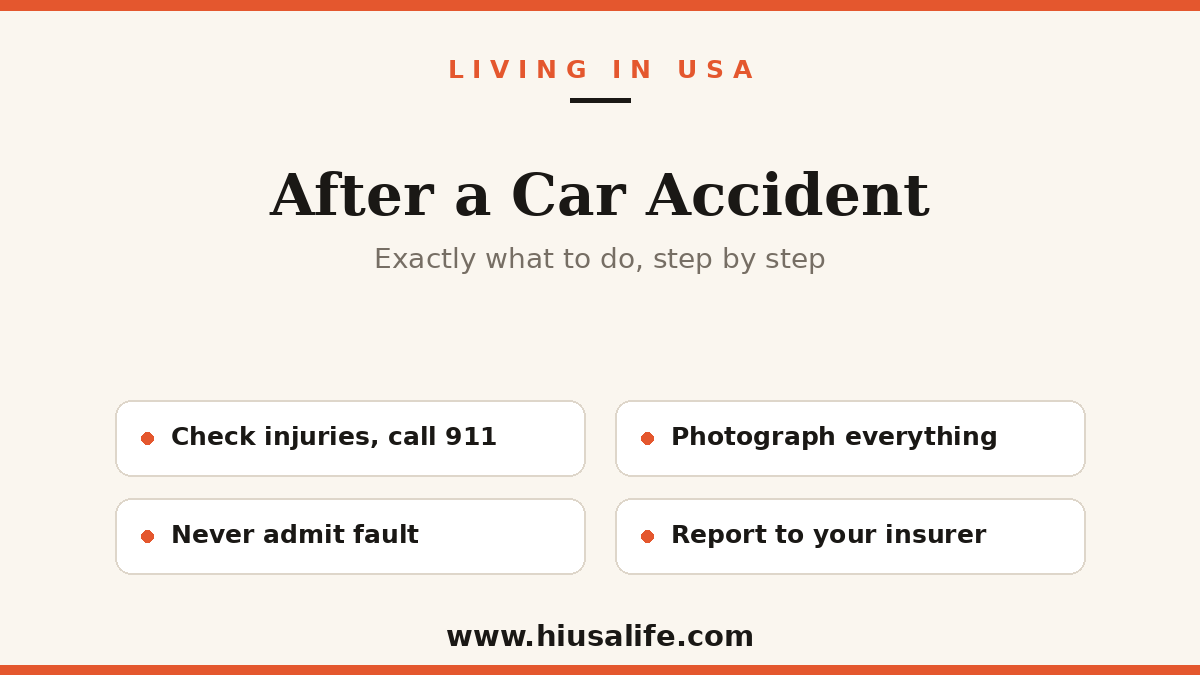

The moments after a crash are exactly when clear thinking is hardest — and when the decisions matter most for your health, your insurance claim, and your wallet. Read this once now, and it’ll be there when you need it.
At the Scene
- Check for injuries and call 911. If anyone is hurt, that’s the first and only priority. A police report also becomes valuable evidence later.
- Move to safety if the cars are drivable and it’s safe — otherwise stay put with hazards on.
- Exchange information: name, phone, address, insurance company and policy number, driver’s license and license plate.
- Photograph everything: all vehicles from multiple angles, damage close-ups, license plates, the street and signals, skid marks, and the overall scene.
- Get witness contact info. Independent witnesses matter enormously if fault is disputed later.
What Not to Say
Be polite, but don’t apologize or admit fault at the scene — including a reflexive “I’m so sorry.” Fault is determined by evidence and law, not by who was kindest in the moment, and an apology can be used against you. Equally: don’t say “I’m fine” before you’ve been checked. Adrenaline masks injuries, and neck and back pain often appear a day or two later.
The Insurance Claim
- Report it to your own insurer promptly, even if the other driver was at fault — policies require timely notice.
- The other driver’s insurer may call for a recorded statement. You’re generally not obligated to give one immediately; it’s reasonable to say you’ll follow up after you’ve seen a doctor.
- Keep every document: medical bills, repair estimates, rental car receipts, and days of work missed.
- If the other driver has no insurance, this is where your uninsured/underinsured motorist coverage does the work — a good reason to check that you have it.
When to Talk to a Lawyer
For a minor fender-bender with no injuries, you usually don’t need one. Consider consulting a personal injury attorney if there are real injuries, if fault is disputed, or if an insurer pressures you to settle quickly. Most offer free consultations and work on contingency. Be aware that each state has a filing deadline (statute of limitations), so don’t sit on a serious claim.
💡 Tip: Keep your insurance card and registration in the glovebox, and save your insurer’s claim phone number in your phone today. In the shock right after a crash, having those two things ready removes a surprising amount of stress.
Related reading: Car Insurance 101 · U.S. Emergency & Helpline Numbers
General information only, not legal or medical advice. Laws and claim procedures vary by state — consult a licensed professional for your situation. In an emergency, call 911.
#CarAccident #InsuranceClaim #AutoInsurance #LivingInUSA #USALife #DrivingInUSA #NewToAmerica #hiusalife
사고 직후는 침착하게 생각하기가 가장 어려운 순간인데, 하필 그때의 판단이 내 건강과 보험 청구, 그리고 지갑에 가장 크게 영향을 줘요. 지금 한 번 읽어두면 필요할 때 기억에 남아요.
사고 현장에서
- 부상 확인 후 911. 다친 사람이 있으면 그게 유일한 최우선이에요. 경찰 리포트는 나중에 중요한 증거가 되기도 해요.
- 차가 움직이고 안전하다면 안전한 곳으로 이동하고, 아니면 비상등을 켜고 그대로 있으세요.
- 정보 교환: 이름, 전화번호, 주소, 보험사와 증권번호, 운전면허, 차량 번호판.
- 사진을 많이 찍으세요: 차량 전체를 여러 각도로, 파손 부위 근접, 번호판, 도로와 신호, 스키드 마크, 현장 전경까지요.
- 목격자 연락처를 받으세요. 나중에 과실 다툼이 생기면 제3자 목격자가 결정적이에요.
하면 안 되는 말
예의는 지키되, 현장에서 사과하거나 과실을 인정하지 마세요 — 반사적으로 나오는 “죄송합니다”도요. 과실은 증거와 법으로 정해지지 그 순간 누가 더 친절했는지로 정해지지 않는데, 사과는 불리하게 쓰일 수 있어요. 마찬가지로 검진 전에 “괜찮아요”라고 말하지 마세요. 아드레날린이 통증을 가리고, 목·허리 통증은 하루 이틀 뒤에 나타나는 경우가 많아요.
보험 청구
- 상대 과실이어도 내 보험사에 신속히 신고하세요 — 약관이 적시 통보를 요구해요.
- 상대 보험사가 녹취 진술을 요청할 수 있어요. 즉시 응할 의무는 대개 없으니, 병원 진료 후 연락하겠다고 해도 괜찮아요.
- 모든 서류를 보관하세요: 의료비, 수리 견적, 렌터카 영수증, 결근 일수.
- 상대가 무보험이면 내 보험의 무보험·저보험 운전자 담보가 작동해요 — 이 담보가 있는지 확인해둘 이유죠.
변호사가 필요한 때
부상 없는 가벼운 접촉사고라면 대개 필요 없어요. 실제 부상이 있거나, 과실 다툼이 있거나, 보험사가 빨리 합의하라고 압박할 때는 인신사고(personal injury) 변호사 상담을 고려하세요. 대부분 무료 상담에 성공보수 방식이에요. 주마다 제소 기한(소멸시효)이 있으니 심각한 건은 미루지 마세요.
💡 팁: 보험카드와 등록증을 글로브박스에 두고, 보험사 사고접수 번호를 오늘 휴대폰에 저장해두세요. 사고 직후의 충격 속에서 이 두 가지가 준비돼 있는 것만으로 스트레스가 확 줄어요.
함께 읽으면 좋은 글: 자동차 보험 기초 · 미국 긴급전화·헬프라인 번호
일반 정보 제공 목적이며 법률·의료 자문이 아닙니다. 법과 청구 절차는 주마다 다르니 전문가와 상담하세요. 응급 상황에서는 911로 전화하세요.
#교통사고 #보험청구 #자동차보험 #미국생활 #미국생활정보 #미국운전 #미국정착 #hiusalife
댓글 남기기