
When parents come from Korea to visit, one uncomfortable fact deserves attention before the flight: a single emergency room visit in the U.S. can cost more than the entire trip, and Korean national health insurance does not follow them here. Visitor medical insurance is inexpensive relative to that risk.
What This Insurance Is (and Isn’t)
Visitor or travel medical insurance is short-term coverage for new illness or injury that happens during the trip. It is not comprehensive U.S. health insurance, and it’s not designed to treat conditions they already have. Typical policies cover emergency care, hospitalization, and sometimes emergency medical evacuation and repatriation.
The Clause That Matters Most
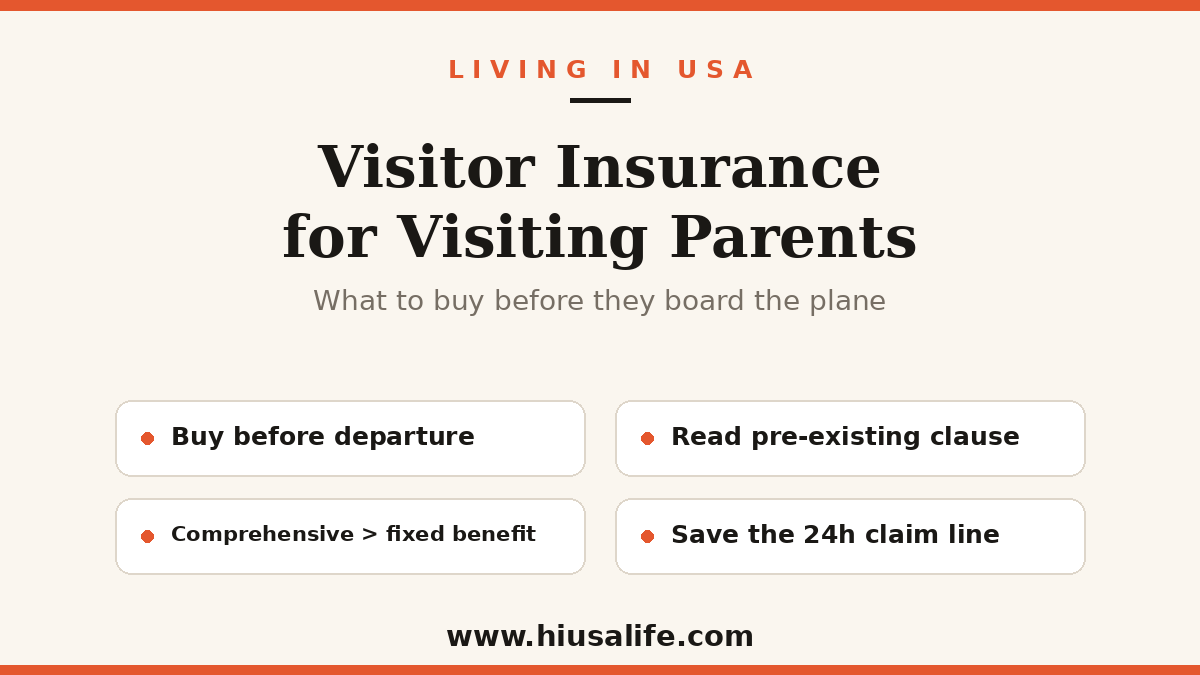
Pre-existing conditions are the heart of the decision. Many plans exclude them entirely; others offer limited “acute onset of a pre-existing condition” coverage, which pays only for a sudden, unexpected flare-up — and often with age limits and a separate, lower cap. If your parents manage ongoing conditions, read this section first and choose the plan by this clause, not by price.
How to Compare Plans
- Fixed benefit vs. comprehensive. Fixed-benefit plans pay a set amount per service and are cheaper — but leave you owing the rest. Comprehensive plans pay a percentage after the deductible and protect much better against a large bill.
- Policy maximum and deductible. A low premium with a small maximum offers little protection in a serious event.
- PPO network access — plans with a U.S. provider network usually mean lower negotiated rates and less paperwork.
- Age bands. Premiums rise sharply with age, and some plans cap coverage or exclude applicants above a certain age.
- Renewal and refunds if the trip is extended or cut short.
Practical Steps Before They Fly
Buy the policy before departure, and keep the policy number, insurer’s 24-hour phone number, and claim instructions saved on both your phone and theirs. Bring a written list of current medications with generic names — U.S. providers won’t recognize Korean brand names. And remember that many policies require you to call the insurer before or immediately after a hospital admission, or the claim can be reduced.
💡 Tip: Compare at least three quotes and read the exclusions page, not the marketing page. The cheapest plan is rarely the one that pays when it matters — and the entire point of buying this is the one scenario you hope never happens.
Related reading: U.S. Emergency & Helpline Numbers
General information only, not insurance or medical advice. Coverage, exclusions, and eligibility vary significantly by policy — read the certificate of coverage before buying.
#VisitorInsurance #TravelMedical #ParentsVisiting #LivingInUSA #USALife #Healthcare #hiusalife
한국에서 부모님이 오실 때, 비행기 타기 전에 짚어야 할 불편한 사실이 하나 있어요. 미국에서 응급실 한 번이 여행 경비 전체보다 비쌀 수 있고, 한국 건강보험은 여기까지 따라오지 않아요. 그 위험에 비하면 방문자 의료보험은 저렴한 편입니다.
이 보험이 무엇이고 무엇이 아닌지
방문자·여행 의료보험은 여행 중 새로 생긴 질병이나 부상을 위한 단기 보험이에요. 미국의 종합 건강보험이 아니고, 이미 갖고 계신 질환을 치료하라고 만든 상품도 아닙니다. 보통 응급 진료, 입원, 경우에 따라 응급 이송·귀국 비용을 보장해요.
가장 중요한 조항
결정의 핵심은 기왕증(pre-existing conditions) 조항이에요. 많은 플랜이 아예 제외하고, 일부는 “기왕증의 급성 발현”에 한해 제한적으로 보장하는데 이건 갑작스럽고 예상치 못한 악화만 해당되며 나이 제한과 별도의 낮은 한도가 붙는 경우가 많아요. 부모님이 지병을 관리 중이시라면 이 항목부터 읽고, 가격이 아니라 이 조항으로 플랜을 고르세요.
플랜 비교하는 법
- 정액형 vs 종합형. 정액형은 항목마다 정해진 금액만 줘서 싸지만 나머지는 본인 부담이에요. 종합형은 자기부담금 이후 비율로 보장해 큰 청구서에 훨씬 강해요.
- 보장 한도와 자기부담금. 보험료가 싸도 한도가 작으면 큰 사고에서 별 도움이 안 돼요.
- PPO 네트워크 이용 — 미국 병원 네트워크가 있는 플랜이 협상 단가가 낮고 서류도 덜 번거로워요.
- 연령 구간. 나이에 따라 보험료가 가파르게 오르고, 일정 나이 이상은 한도를 줄이거나 가입을 제한하는 플랜도 있어요.
- 여행이 연장·단축될 때의 연장 및 환불 조건.
출발 전 실무 준비
보험은 출발 전에 가입하시고, 증권번호·보험사 24시간 연락처·청구 방법을 부모님 휴대폰과 내 휴대폰 양쪽에 저장해두세요. 복용 중인 약은 성분명(제네릭명)으로 적은 목록을 챙기세요 — 미국 의료진은 한국 제품명을 모릅니다. 그리고 상당수 플랜이 입원 전 또는 직후에 보험사에 연락할 것을 요구하는데, 안 하면 보험금이 깎일 수 있어요.
💡 팁: 최소 세 곳 견적을 비교하고, 광고 페이지가 아니라 면책 조항 페이지를 읽으세요. 가장 싼 플랜이 정작 필요할 때 지급하는 경우는 드물어요 — 이 보험을 드는 이유 자체가 결코 일어나지 않길 바라는 그 한 상황이니까요.
함께 읽으면 좋은 글: 미국 긴급전화·헬프라인 번호
일반 정보 제공 목적이며 보험·의료 자문이 아닙니다. 보장 범위·면책·가입 자격은 상품마다 크게 다르니 가입 전에 약관을 확인하세요.
#방문자보험 #여행자보험 #부모님초청 #미국의료 #미국생활 #미국생활정보 #hiusalife
댓글 남기기