
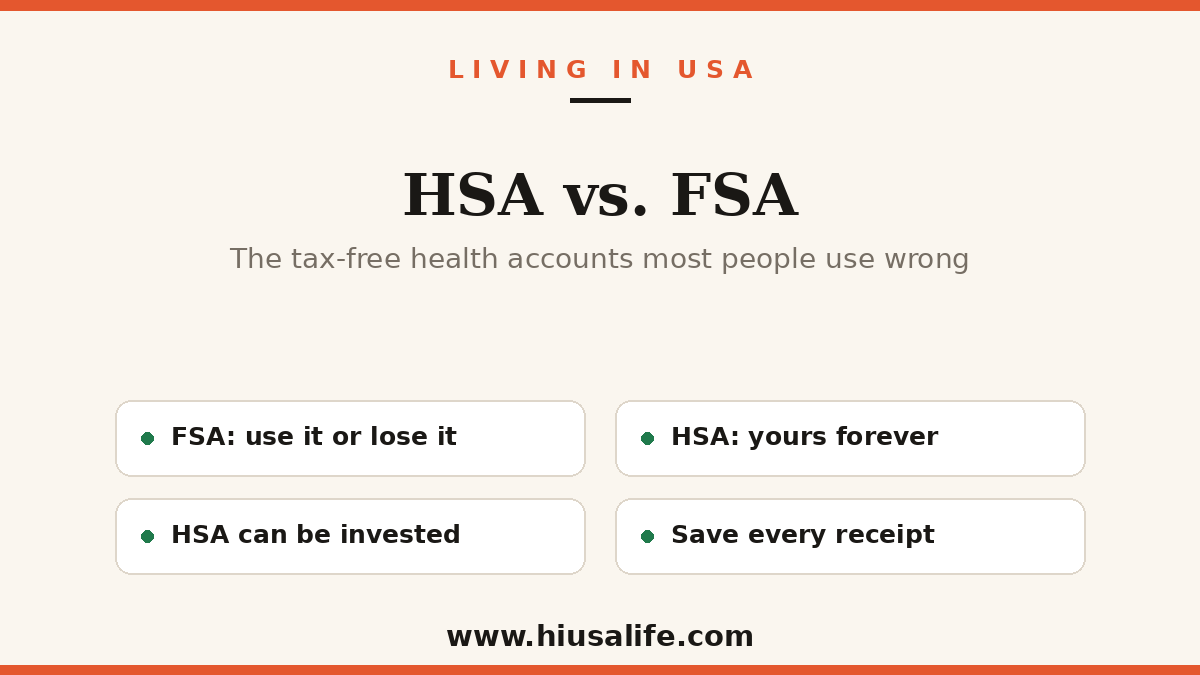
Two accounts at your workplace let you pay medical costs with untaxed money — and most people either ignore them or pick the wrong one. The difference matters more than the similar names suggest.
FSA: Use It or Lose It
A Flexible Spending Account is offered through your employer and funded by payroll deductions. You pick an amount during open enrollment, and it’s deducted pre-tax across the year. The catch is in the name of the rule: money left at year end is generally forfeited, though many plans allow a small carryover or a short grace period. It’s also tied to your job — leave, and it usually ends.
One quirk in your favor: your full annual election is available on day one, even though you’re still contributing. If you need a big procedure in January, that’s useful.
HSA: The One That Actually Builds Wealth
A Health Savings Account requires you to be enrolled in a qualifying high-deductible health plan. In exchange you get what’s often called a triple tax advantage: contributions are pre-tax, growth is tax-free, and withdrawals for qualified medical expenses are tax-free.
- The money is yours forever. No use-it-or-lose-it, and it follows you when you change jobs.
- It can be invested once you hit a minimum balance — this is the part most people never turn on, leaving years of growth on the table.
- After 65, non-medical withdrawals are allowed at ordinary income tax rates, like a traditional IRA, while medical withdrawals stay tax-free.
Which Should You Choose?
You generally can’t contribute to both a full-purpose FSA and an HSA in the same year. If your employer offers a qualifying high-deductible plan and you’re reasonably healthy, the HSA is usually the stronger long-term choice. If you have predictable, ongoing medical or dental costs — or no HSA-eligible plan available — the FSA does its job well. There are also Dependent Care FSAs for childcare, which are a separate account with their own limit.
💡 Tip: Save every medical receipt. With an HSA there’s no deadline to reimburse yourself — you can pay out of pocket today, let the account grow invested for years, and withdraw tax-free later against those old receipts. It’s one of the few genuinely free lunches in U.S. personal finance.
Related reading: 2026 Retirement Account Limits · U.S. Tax Filing Basics
General information as of July 2026, not tax or medical advice. Limits and plan rules change annually — confirm with your employer or plan administrator.
#HSA #FSA #HealthSavings #TaxFree #LivingInUSA #USALife #PersonalFinance #hiusalife
직장에서 제공하는 두 계좌를 쓰면 의료비를 세금 안 뗀 돈으로 낼 수 있어요. 그런데 대부분은 아예 안 쓰거나, 잘못 고릅니다. 이름이 비슷해서 그렇지 차이가 꽤 커요.
FSA: 안 쓰면 사라져요
FSA(유연지출계좌)는 회사를 통해 제공되고 급여에서 공제돼요. 오픈 인롤먼트 때 금액을 정하면 1년에 걸쳐 세전으로 빠져나갑니다. 문제는 이름 그대로 — 연말에 남은 돈은 원칙적으로 소멸돼요(일부 플랜은 소액 이월이나 짧은 유예기간을 줘요). 직장에 묶여 있어서 퇴사하면 대개 끝납니다.
유리한 특징 하나: 아직 적립 중이어도 연간 신청액 전액을 1월부터 쓸 수 있어요. 연초에 큰 치료가 필요하면 유용하죠.
HSA: 실제로 자산이 되는 계좌
HSA(건강저축계좌)는 고액공제 건강보험(HDHP)에 가입돼 있어야 열 수 있어요. 대신 흔히 ‘삼중 세제 혜택’이라 불리는 걸 받습니다 — 넣을 때 세전, 불어날 때 비과세, 적격 의료비로 쓸 때도 비과세예요.
- 돈이 영원히 내 것이에요. 소멸 규정이 없고, 이직해도 따라옵니다.
- 일정 잔액을 넘으면 투자할 수 있어요 — 대부분이 이 기능을 안 켜둬서 몇 년치 수익을 그냥 흘려보내요.
- 65세 이후에는 의료비가 아닌 인출도 일반 소득세만 내고 가능해서 전통 IRA처럼 쓸 수 있고, 의료비 인출은 계속 비과세예요.
뭘 골라야 할까
같은 해에 일반 FSA와 HSA를 동시에 넣는 건 대개 안 돼요. 회사가 HDHP를 제공하고 건강한 편이라면 장기적으로는 HSA가 대체로 유리해요. 반대로 매년 예측 가능한 의료비·치과비가 있거나 HSA 가능한 플랜이 없다면 FSA가 제 역할을 합니다. 육아비용을 위한 Dependent Care FSA도 별도로 있고 한도도 따로예요.
💡 팁: 의료비 영수증을 다 모아두세요. HSA는 환급 청구에 기한이 없어요 — 오늘은 그냥 현금으로 내고, 계좌는 몇 년간 투자로 불린 다음, 나중에 그 옛날 영수증으로 비과세 인출을 할 수 있습니다. 미국 재테크에서 몇 안 되는 진짜 공짜 점심이에요.
함께 읽으면 좋은 글: 2026 은퇴계좌 한도 · 미국 세금 신고 기초
2026년 7월 기준 일반 정보이며 세무·의료 자문이 아닙니다. 한도와 플랜 규정은 매년 바뀌니 회사나 플랜 운영사에 확인하세요.
#HSA #FSA #건강저축계좌 #세금절약 #미국생활 #미국생활정보 #미국직장 #hiusalife
댓글 남기기