
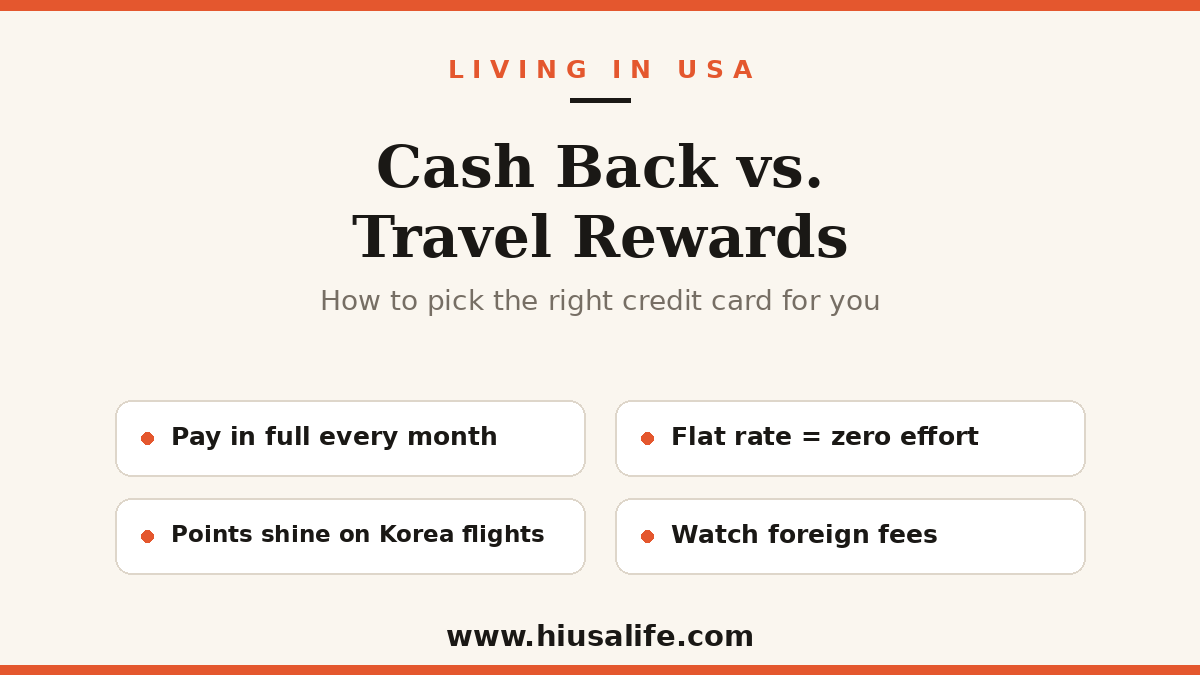
Once you have a U.S. credit history, the next question is which card actually pays you the most. The honest answer depends less on the card and more on how you spend — and on one habit that decides whether rewards are real money or an illusion.
The Rule That Comes First
Rewards only exist if you pay the full statement balance every month. Card interest rates run far above any reward rate, so carrying a balance to earn 2% back is like paying 20% for a 2% coupon. If you sometimes carry a balance, ignore rewards entirely and shop for the lowest interest rate instead.
Cash Back: Simple and Predictable
- Flat-rate cards pay the same percentage on everything. Zero effort, and a solid default for most people.
- Category cards pay more at groceries, gas, or restaurants — worth it only if that’s genuinely where your money goes.
- Rotating-category cards pay a high rate on quarterly categories you must activate. Real money if you remember; nothing if you don’t.
Travel Rewards: Higher Ceiling, More Work
Points and miles can be worth more per dollar than cash back — especially on flights to Korea, where a good redemption can beat a cash price by a wide margin. But the value is conditional: you have to find award availability, be flexible on dates, and understand transfer partners. Cards with the biggest bonuses usually carry annual fees, which only pay off if you actually use the perks.
Also check foreign transaction fees. Many basic cards add roughly 3% on purchases abroad — if you visit Korea regularly, a no-foreign-fee card quietly saves more than most reward programs earn.
Sign-Up Bonuses, Read Carefully
The bonus is usually the single largest reward you’ll ever get from a card — but it requires spending a set amount within a few months. Never manufacture spending you didn’t plan; the interest or clutter costs more than the bonus. Time your application around a large planned purchase instead.
💡 Tip: Before applying, add up last year’s spending by category from your bank statements. Ten minutes with real numbers beats any “best cards” list, because the right card is simply the one that matches your actual life. And remember each application is a hard inquiry, so space them out.
Related reading: Build Your U.S. Credit Score Fast
General information only, not financial advice. Card terms, fees, and bonuses change frequently — verify current details with the issuer.
#CreditCards #CashBack #TravelRewards #PointsAndMiles #LivingInUSA #USALife #PersonalFinance #hiusalife
미국 신용 기록이 생기면 다음 질문은 “어떤 카드가 제일 많이 돌려주나”예요. 솔직한 답은 카드보다 내 소비 패턴에 달려 있고, 리워드가 진짜 돈이 되느냐 착각이 되느냐를 가르는 습관 하나에 달려 있어요.
가장 먼저 지켜야 할 원칙
리워드는 매달 청구액을 전액 상환할 때만 존재해요. 카드 이자율은 어떤 리워드율보다 훨씬 높아서, 2% 받으려고 잔액을 남기는 건 2% 쿠폰을 위해 20%를 내는 셈입니다. 가끔이라도 잔액을 넘기신다면 리워드는 잊고 이자율 낮은 카드를 고르세요.
캐시백: 단순하고 예측 가능
- 정률 카드는 모든 소비에 같은 비율을 줘요. 신경 쓸 게 없어서 대부분에게 무난한 기본값이에요.
- 카테고리 카드는 마트·주유·외식에 더 줘요. 실제로 거기에 돈을 많이 쓸 때만 이득이에요.
- 분기 순환 카드는 분기마다 바뀌는 카테고리에 높은 비율을 주지만 직접 활성화해야 해요. 기억하면 실제 돈, 잊으면 0원.
트래블 리워드: 상한이 높지만 손이 가요
포인트·마일은 캐시백보다 1달러당 가치가 클 수 있어요 — 특히 한국행 항공권은 잘 쓰면 현금가를 크게 이기죠. 다만 조건부 가치예요. 좌석을 찾아야 하고, 날짜가 유연해야 하고, 제휴사 전환을 이해해야 해요. 보너스가 큰 카드는 대개 연회비가 있는데, 혜택을 실제로 써야 본전이 나옵니다.
해외 사용 수수료도 확인하세요. 기본 카드 상당수가 해외 결제에 약 3%를 붙여요 — 한국에 자주 가신다면, 수수료 없는 카드가 웬만한 리워드보다 조용히 더 많이 아껴줍니다.
신규 보너스, 꼼꼼히 보세요
보통 카드에서 받는 가장 큰 리워드가 신규 보너스예요. 대신 몇 달 안에 정해진 금액을 써야 하죠. 계획에 없던 소비를 억지로 만들지 마세요 — 이자나 낭비가 보너스보다 비쌉니다. 큰 지출이 예정된 시점에 맞춰 신청하는 게 정답이에요.
💡 팁: 신청 전에 은행 명세서로 작년 소비를 카테고리별로 합산해보세요. 실제 숫자로 보는 10분이 어떤 “최고의 카드” 목록보다 정확해요. 나에게 맞는 카드는 그냥 내 생활과 겹치는 카드거든요. 그리고 신청마다 하드 인쿼리가 찍히니 간격을 두세요.
함께 읽으면 좋은 글: 미국 신용점수 빠르게 올리는 법
일반 정보 제공 목적이며 재정 자문이 아닙니다. 카드 조건·수수료·보너스는 자주 바뀌니 카드사에서 확인하세요.
#미국신용카드 #캐시백 #항공마일 #리워드카드 #미국생활 #미국생활정보 #재테크 #hiusalife
댓글 남기기